Experts from the Midcontinent System Operator (MISO), Entergy New Orleans, grid experts, renewable energy developers, the Union of Concerned Scientists, and the Alliance for Affordable Energy came to discuss the future of the grid. Transmission Day helped educate and answer questions from the New Orleans City Climate and Sustainability Committee.
The Midcontinent Independent System Operator, commonly known as MISO (pronounced MY-so), is a nonprofit organization that manages the flow of electricity across 15 states, including most of Louisiana.
Think of it like this: Transmission lines are like highways for power. MISO helps ensure we have enough highways, or transmission lines, to move electricity from where it’s generated to where it’s needed.
Investor-owned utilities win when they can build a grid that benefits their own assets. Residents win when we have more access to our neighbors’ grids so that when electricity demand is high and power is expensive locally, we can access other more affordable, diverse energy sources.
MISO is a regional transmission organization (RTO). There are 7 RTOs across the country. Entergy Louisiana, Entergy New Orleans and Cleco are all members of MISO. SWEPCO is a member of a different RTO, the Southwest Power Pool (SPP).
For every $1 spent on MISO membership, Louisiana receives $15 in benefits. In 2024 MISO provided members $4.5+ billion in benefits and SPP provided members $3.9 billion in benefits.
The amount of energy that is needed in a city, or suburban center can’t always be created near-by – and that’s where transmission lines come in handy!
Our transmission system is made of large transmission poles and lines which carry fast moving, high voltage (115 kV and above) electricity. These lines travel long distances to power cities and population hubs.
Transmissions take 10 years to plan, permit, site, and make fully operational. Due to this lengthy timeframe, advocates and regulators need to make sure that decisions are made with well-informed long-term benefits in mind.
Electricity is first generated, or created. Generation sources vary from natural gas power plants, to nuclear power plants, to wind turbines to power generated from solar panels.
After electricity is generated it then usually needs to travel to its final destination via a transmission line. A substation is needed to “step up” the voltage so that the electricity can travel on the transmission grid at high speeds.
To safely arrive at the final consumer, the voltage must be reduced. The electricity is “stepped-down” at a substation so that the electricity can travel safely on distribution lines.
This is the infrastructure we typically see in neighborhoods and local business corridors. Distribution lines operate at 34.5 to 115 kV.
An area of the grid where electricity demand is high and imports of power into the region are limited due to limited transmission capacity.
Gridlab, experts on decarbonizing the grid discussed how transmission planning improves the resilience and reliability of the grid. Expanding our transmission grid can enable more access to renewable energy, thereby making transmission a critical component to a clean energy grid.
The impacts of climate change were also discussed, as transmission can help to keep the lights on during extreme weather, and reduce fossil fuel emissions by reducing the need to build costly fossil fueled generation. One interesting note is that extreme weather events like tornados and hot weather have real costs not captured by ENO planning models. The Union of Concerned Scientists discussed findings from their Power After The Storm Report, and discussed how the right kind of transmission planning is critical to reduce the impacts of extreme weather, and reduce energy equity disparities.
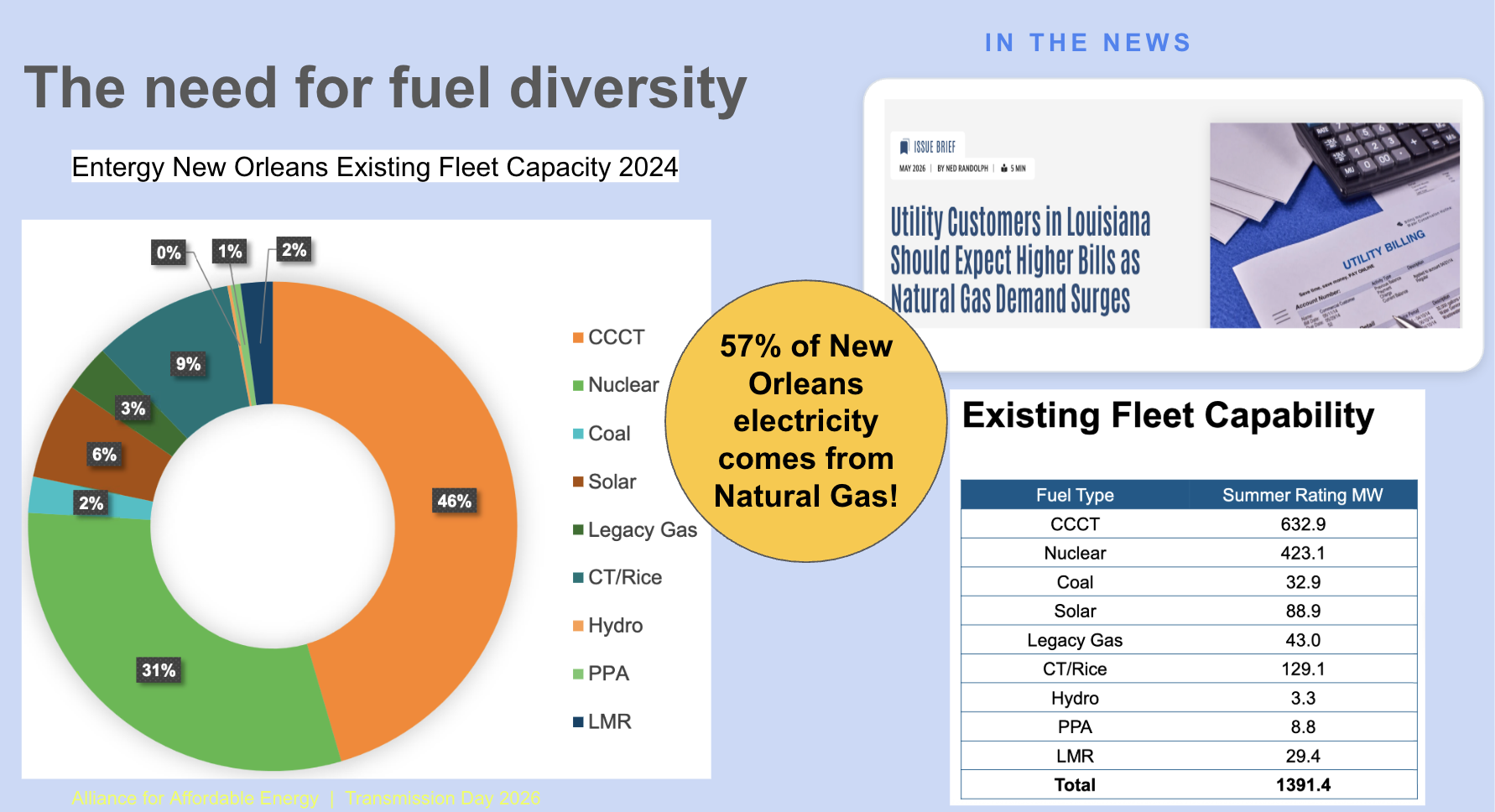
The Alliance for Affordable Energy discussed transmission planning from the consumer advocate perspective. The current status quo of transmission planning in New Orleans and Louisiana often leaves consumers paying higher rates due to a congested grid, compounding electric utility rate increases that have come from an over-reliance on natural-gas fired power generation. Grid congestion costs happen when low cost power cannot reach an area because of limited transmission, which results in consumers paying for more costly, locally generated electricity.
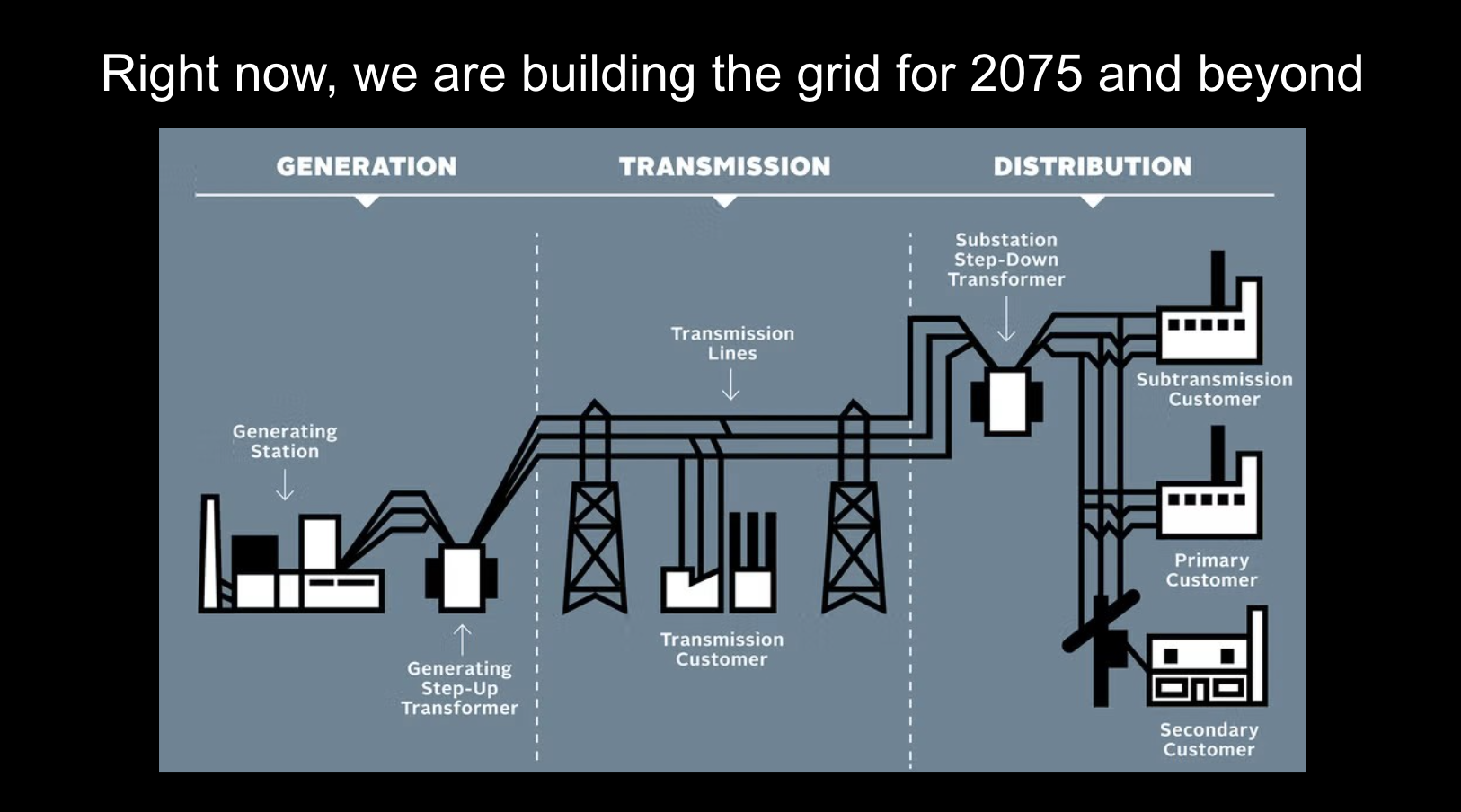
Building the grid of 2075 is about to begin – that process begins with building reliability and economic planning models which MISO will conduct. The early steps of MISO’s long term regional transmission planning for the MISO South region will begin in 2027 – a long awaited process. This long-term planning process provides a unique opportunity for the New Orleans City Council to engage in planning the grid of the future and making smart investments that will benefit communities today, and for generations to come.
New Orleans residents made public comments, often encouraging the city council’s engagement with MISO and their long term planning process. The City Council Climate and Sustainability committee was also able to ask questions of the presenters.
Transmission day provided a first for New Orleans – a day dedicated to proactively discussing our future electric grid and how to develop a well-informed plan for our collective future. The Alliance anticipates more opportunities for open dialogue about New Orleans energy grid investments with the public.