As part of a settlement that emerged from Entergy Louisiana’s last request to increase rates, the utility agreed to participate in a working group to identify solutions for low income households who wind up delinquent in their payments. The Alliance joined the working group to advocate on behalf of families across Entergy’s service territory.
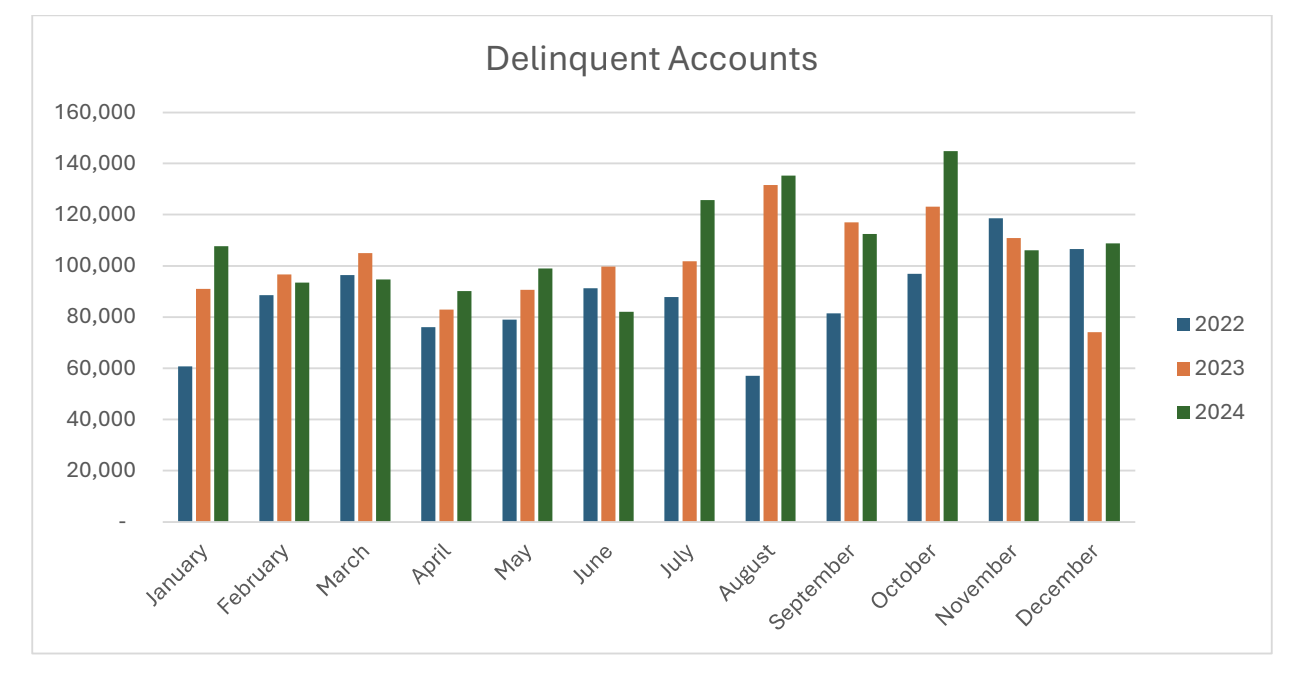
The working group looked at data from January 2022 to December 2024 on how many families were delinquent on their bills, also known as being “in arrears” or having utility debt.
During that time period, anywhere from ~60,000 to 140,000 accounts were delinquent in any given month, with more accounts delinquent during the latter half of the year. In some zipcodes, especially those in Jefferson, Ouachita, and East Baton Rouge Parishes, 8.17 to 22.72 percent of accounts were behind on bill payments.
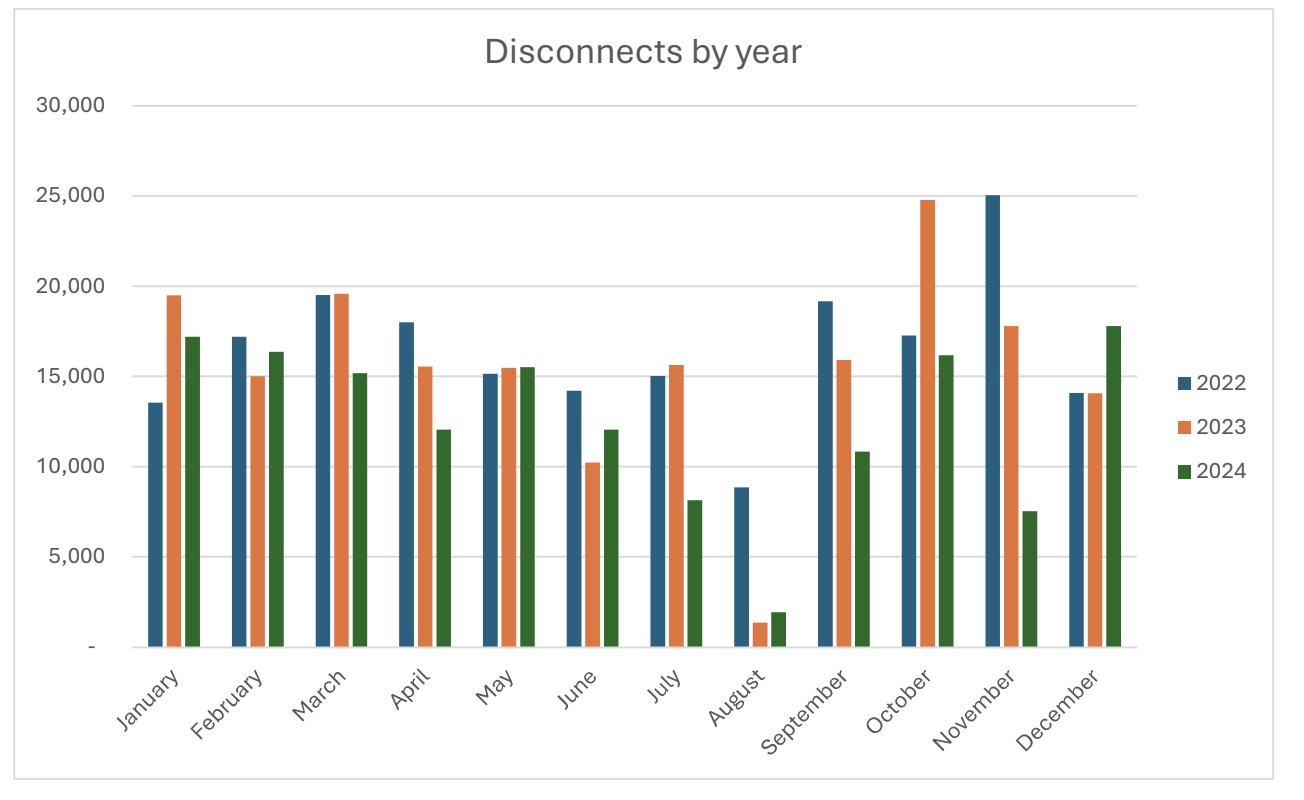
These missed payments led to disconnections by Entergy, frequently totalling around 15,000-20,000 disconnections monthly. While 75 percent of disconnected households were reconnected within 48 hours, around 25 percent waited more than two days to get back online.
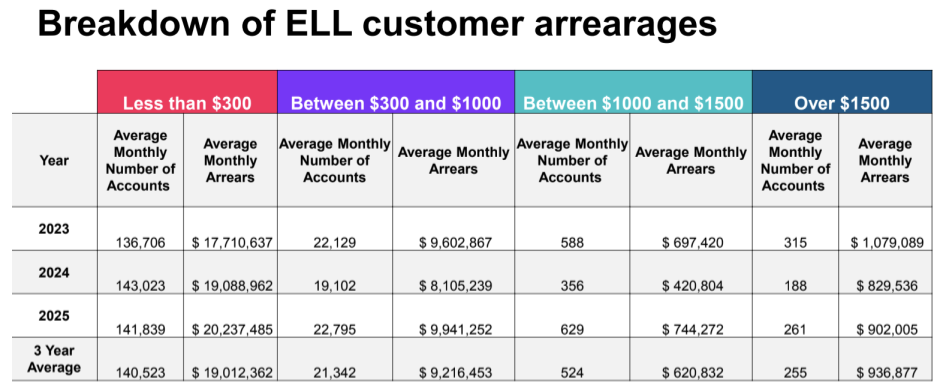
The vast majority of households – an average of more than 140,00 per month – owed less than $300. Some 21,000 households owed between $300 to $100, while more than 250 owed more than $1,500.
The average number of households who received financial assistance stayed fairly high for most of the study period, totaling between 5,000 to 10,000 accounts on average. However, during the later months of the year in almost every year analyzed, the number skyrocketed, topping out at about 35,000 households in October of 2023. During that same month, accounts that were disconnected for non-payment and then were never reconnected also reached an all-time high. During that period, temperatures were higher than normal, which causes electricity demand and gas-powered generator usage for cooling to rise.
While several programs already exist to help families lower their bills, the Working group discussed solutions that are already working in other states. Entergy eventually proposed two additional programs: a Time of Use Rate and the Debt Forgiveness Pilot Program. The latter would be piloted with 150 households before any expansion takes place.
Entergy has presented the Time of Use Rate as an optional program that incentivizes households to use less power during the peak hours of 3-7pm from June-September. The program is estimated to reduce the demand during peak hours ~18MW by the fifth year of the program and ~50MW by the tenth year. An estimated seventeen percent of residential households, and a larger share of those particularly vulnerable, would see lower bills without changing their behavior at all. Entergy is expected to bring the full Time of Use Rate proposal to the Public Service Commission (PSC) this year for implementation next year.
The Debt Forgiveness Pilot Program would serve as a testbed for a larger debt forgiveness program. Under the pilot, Entergy would forgive up to $1,500 worth of debt for 150 low-income, elderly, and disabled residents. In order to qualify, households would need to pay their current bill on time each month. For each month they do so, Entergy would forgive 1/12th of past-due balances. However, failure to pay on time would result in removal from the program.
The money for this program comes from Entergy’s existing Power to Care program, which provides emergency bill payment assistance to seniors and disabled individuals. The money for that program comes from donations from the public and Entergy staff across all of the states they serve, and is matched by Entergy shareholders. That leaves $225,000 – the cost of the pilot – less for the Power to Care program, which is already underfunded and failing to meet residents’ needs. That’s why we believe the program is a good start, but limited in its scale and impact at only 150 households.
During the September PSC meeting, Entergy said they were finalizing another program using Power to Care funds to provide one-time bill relief for residents. However, no details were shared at this time. Again, The Alliance would like to see new funds dedicated to solve the affordability crisis, rather than taking money away from programs that need it most.
Entergy is expected to finalize the Debt Forgiveness Pilot Program proposal by the first half of 2027. The program would be regulated and run by Entergy itself, while the Commission has committed to asking Entergy to supply reporting on it. AAE is glad to see this oversight, as it’s crucial to understanding the efficacy of the program
The Alliance’s Take: While these policies are not enough to address the scale of the affordability crisis, The Alliance feels they are a good start to addressing the hardships faced by families struggling to afford high energy costs. The working group meetings were productive, and AAE appreciates everyone who gave time to help make things easier for Louisiana’s most vulnerable households. The Louisiana Legislature has also created a task force, also intended to address unmanageable utility costs, and hopefully this and other efforts in Louisiana will finally ensure Louisianans can keep the lights on. The Alliance will continue to fight for solutions that lower costs, decrease disconnections and outages, and increase reliability.