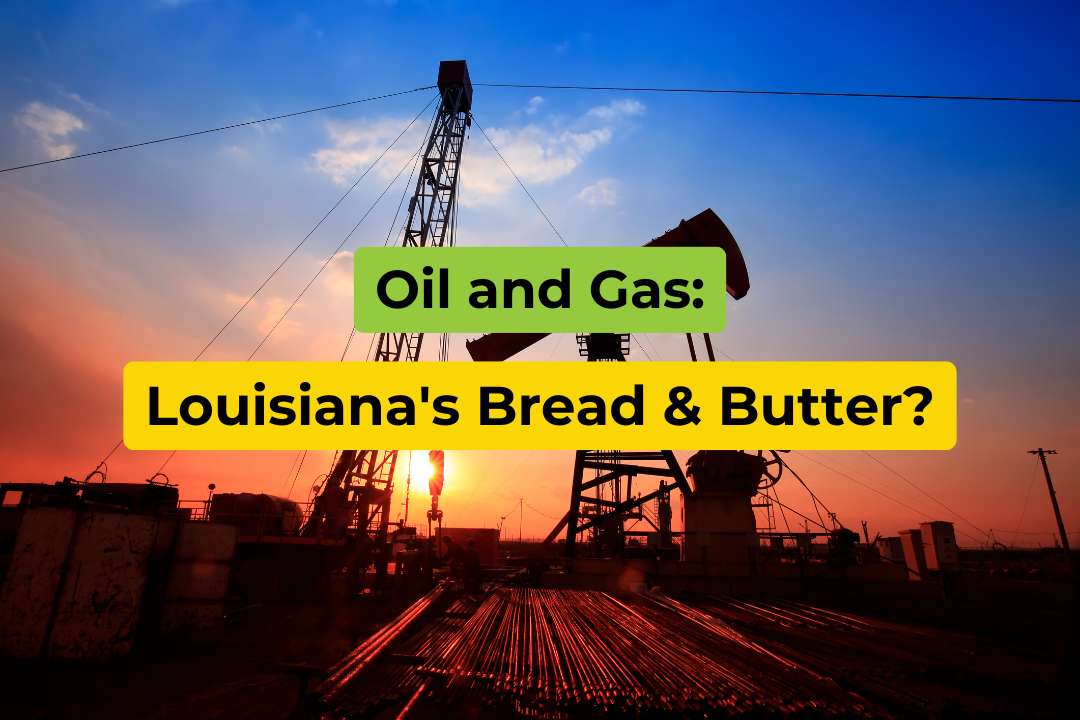
With more than 80 percent of waterborne U.S. oil rigs located in Louisiana, and the state ranking No. 2 in both crude oil and natural gas production in the nation, when offshore production is included [1], it’s no wonder that the industry has garnered this reputation for itself.
But dig a little bit deeper and a wildly different picture emerges: a diversified economy, falling natural gas prices, tax breaks for producers, and a host of other factors combine in a perfect storm of revenue loss for Louisiana.
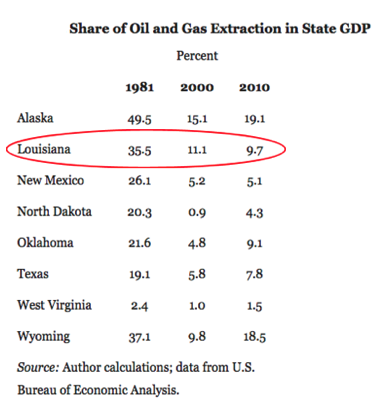
Despite maintaining its No. 2 ranking in oil and natural gas production (behind Texas), the Louisiana share of oil and gas extraction in state GDP has declined from 35.5% in 1981 to just 9.7% in 2010, a 25.8% decrease [2]. This is likely the result of a diversified economy. In other words, Louisiana has significant sources of revenue (i.e. tourism, agriculture, commercial fishing, etc.) apart from oil and gas revenue, and therefore oil and gas shares in state GDP are diluted.
Not only has the share of oil and gas in state GDP declined, but prices of oil and natural gas have also declined. What does this mean for Louisiana’s economy? A historical look at Texas is telling: oil prices witnessed a dramatic price increase from 1972 to 1982, during which time, Texas’ economic output and employment experienced growth rates of 7.5% and 5.5% respectively. But when oil prices dropped in 1986, Texas fell into a deep, two-year recession [3]. Given the falling prices of natural gas, it’s possible that Louisiana will soon face a similar fate as Texas in 1986.

Market factors are not the only issues surrounding oil and particularly natural gas in Louisiana’s economy. Tax breaks for electric power, energy, or natural gas represent 19.1% of Louisiana’s tax breaks from 2011 to 2012. The Ad Valorem Natural Gas tax break allows a refundable credit for 100 percent of the ad valorem taxes paid to political subdivisions in Louisiana on natural gas held, used, or consumed in providing natural gas storage services or operating natural gas storage facilities. The Ad Valorem Offshore Vessels tax break allows a refundable credit for 100 percent of the ad valorem taxes paid on vessels in Outer Continental Shelf Lands Act Waters. The Severance Tax Relief program allows the suspension of severance taxes due on production for qualifying wells for a variable time period depending on the category. Combined, these three tax credit programs have cost Louisiana a total of $3.57 billion from 2000 to 2014, $3.87 million of which came from 2014 alone. The chart to the right shows that as natural gas production in Louisiana has spiked, the amount of natural gas that has been subject to taxes has declined.
In sum, oil and gas shares have fallen as a percentage of state GDP due to a more diversified economy; an overproduction of natural gas has caused a glut and therefore a price decrease, which could land Louisiana in a recession; and the state is funding the overproduction of natural gas with tax credit programs that have cost the state over $3 million dollars in the last year alone. The oil and gas industry is neither as central nor as beneficial to Louisiana’s economy as it claims to be.
We think it is time for these old fashioned, dirty sources of energy to pay their fair share. Renewables offer much more to our economy, our land, and our people. Lets’ support a clean energy economy.
[1] “Louisiana’s Energy Advantages.” Energy Industry in Louisiana. Accessed November 17, 2015. www.opportunitylouisiana.com/key-industries/energy.
[2] Brown, Stephen P.A., and Mine K. Yucel. “The Shale Gas and Tight Oil Boom: U.S. States’ Economic Gains and Vulnerabilities.” Council on Foreign Relations. October 2013. Accessed November 17, 2015.
[3] Brown, Stephen P.A., and Mine K. Yucel. “The Shale Gas and Tight Oil Boom: U.S. States’ Economic Gains and Vulnerabilities.” Council on Foreign Relations. October 2013. Accessed November 17, 2015.