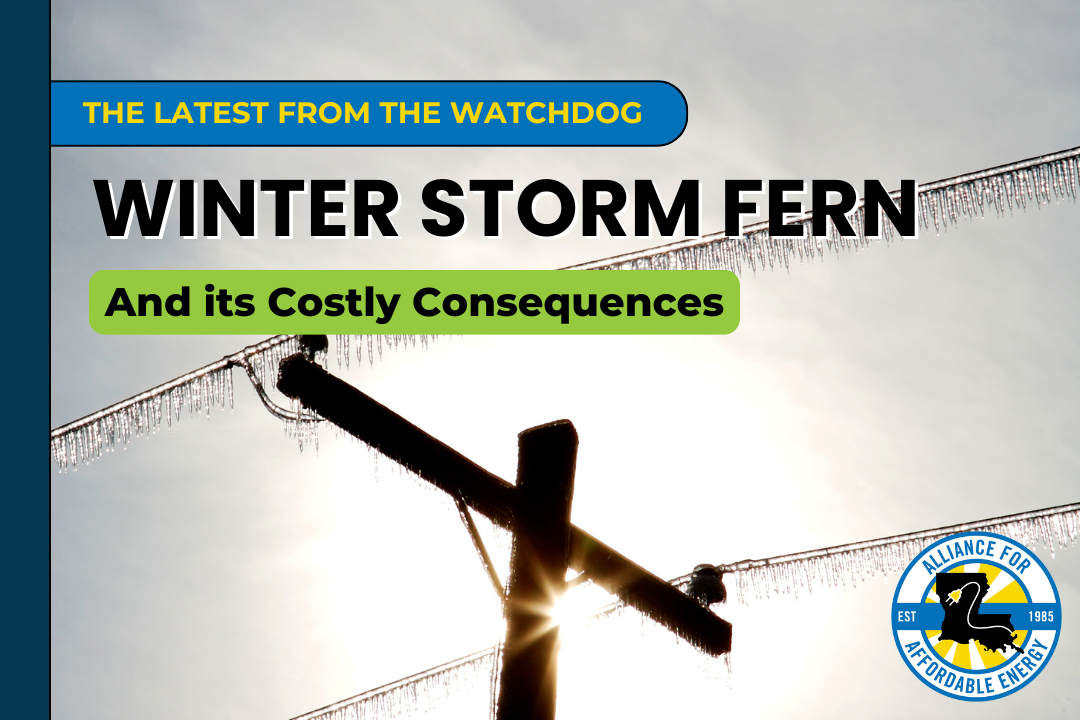
Extreme cold and ice have shaken communities across the state, with the worst effects hitting homes in northern parishes and taking out power for hundreds of thousands of households after trees and power lines broke under the weight of heavy ice. Without access to electricity for over a week, residents have died of carbon monoxide poisoning, hypothermia, and hypoxia while trying to shelter from sub-zero temperatures.
These tragedies highlight the critical nature of electricity, and the challenges Louisianans face year-round when that power isn’t available.
Health and safety demands access to electricity, and homes that use power efficiently. A house that is well insulated can keep people safe for days longer when the grid does fail, while a drafty house not only costs more to heat, it becomes hazardous quickly when the power goes out. This is just one more reason why we at The Alliance fiercely advocate for more investment in energy efficient housing that reduces costs for residents and businesses no matter the temperature. That’s how we build actual resilience.
Ice storms are particularly damaging to energy infrastructure, and the work of re-building the system is not easy, or cheap. Utilities pass all repair costs onto customers if approved by our regulators as prudent (aka necessary). This appears as an additional line item on bills, often called a “rider.” The Alliance is keeping an eye out for after-reports on the restoration costs for Winter Storm Fern.
But outages and post-storm restoration costs aren’t the only impacts that will haunt utility bills long after the ice is melted. The most immediate issue for residents and businesses is the cost of gas. Electricity and gas bills we pay in Louisiana both depend on the price of fossil gas on wholesale markets.
This article from the Wall Street Journal describes a wild ride that the February Henry Hub futures and spot prices went on the weekend that Fern blew through. When Fern drove up the demand for gas for both direct heating and electricity generation, the immediate (spot) prices peaked at $30.57MMBtu (per one million British thermal units) — which was even higher than during the shocking 2021 winter storm Uri when gas spiked to $23.61.
Fluctuations in gas prices affect both gas and electric bills because gas is used for both direct heating and as fuel for power plants that provide electricity.
If you use gas for heating or cooking or say maybe your dryer, the increased price of gas is passed directly onto your bill. If you’re a Delta customer this shows up on your bill as the “Purchased Gas Adjustment.” These recent price increases mean every unit of gas you use is getting more expensive.
Changes in the price of gas also affect electricity bills because our utilities in Louisiana rely heavily on power plants that run on fossil fuels. About 76% of our electricity is generated using gas. When the price of gas goes up, utilities pass those increases in fuel costs onto customers. This shows up on electricity bills as a “Fuel Adjustment Charge.”
This increase in the price of gas on the market is one of the biggest drivers behind the high gas (Delta Utilities and Atmos) and high electricity (Entergy and Cleco) bills that Louisianans have seen over the last month.
Another thing to remember: the price of gas that shows up on your bills is from two months before your bill date, there’s a delay. That means the costs we saw on bills in December were based on the price of gas in the October market. The price of gas was only high for half the month of October, but November prices were high the whole month. This means we can expect January bills to be even higher than December.
Residents and businesses are already feeling and seeing the impacts of prices increasing. Delta bills that were sent out in late December/early January with high gas prices charged “Purchased Gas Adjustment” at $0.67655/CCF. The Delta bills coming out now have an even higher “Purchased Gas Adjustment” at $0.713399.
Since this gas price volatility on the market is continuing, we know that bills will continue to be high for the next two months at least. Our regulators have the authority to require utilities to spread fuel costs over more than one month to smooth out rate shocks, and residents can sign up for levelized billing which can also help spread costs out. But the best bang for our buck is to find ways to use less energy.
How do we do that? Energy efficiency. Plus, diversifying the sources of our energy to include renewable resources like solar and wind can help protect customers from this kind of volatility because renewable energy isn’t impacted by the cost of gas.
The Problem: If we just throw more gas at the problem, we risk greater vulnerability to even small increases in gas prices, which show up as expensive bills for residents and businesses for months to come.
The Solution: Prepare Louisiana housing for the weather extremes we’re experiencing with investments in energy efficiency, which pay off year-round, and by diversifying the sources of our energy to include renewable resources, which isn’t impacted by the cost of gas.
Check to see if you're eligible for this assistance program administered in partnership with United Way of Southeast Louisiana. The program provides up to $250 in bill assistance for low-income residents. One assistance payment per household within a 12-month period.
Learn More & Apply