The Alliance supports the growth of both land-based and offshore wind power in Louisiana because it can help lower energy costs for Louisianans.
Wind energy can also help create a more reliable grid, especially in times of high energy demand, because it has a complementary generation profile to other resources, like solar — meaning it often produces power when other sources of energy aren’t available. Diversifying our energy sources to include wind can also help protect us from fluctuating fossil fuel prices.
The cost of wind energy has decreased significantly in the past decade and investment in wind energy can offer significant job and economic development opportunities for Louisiana.
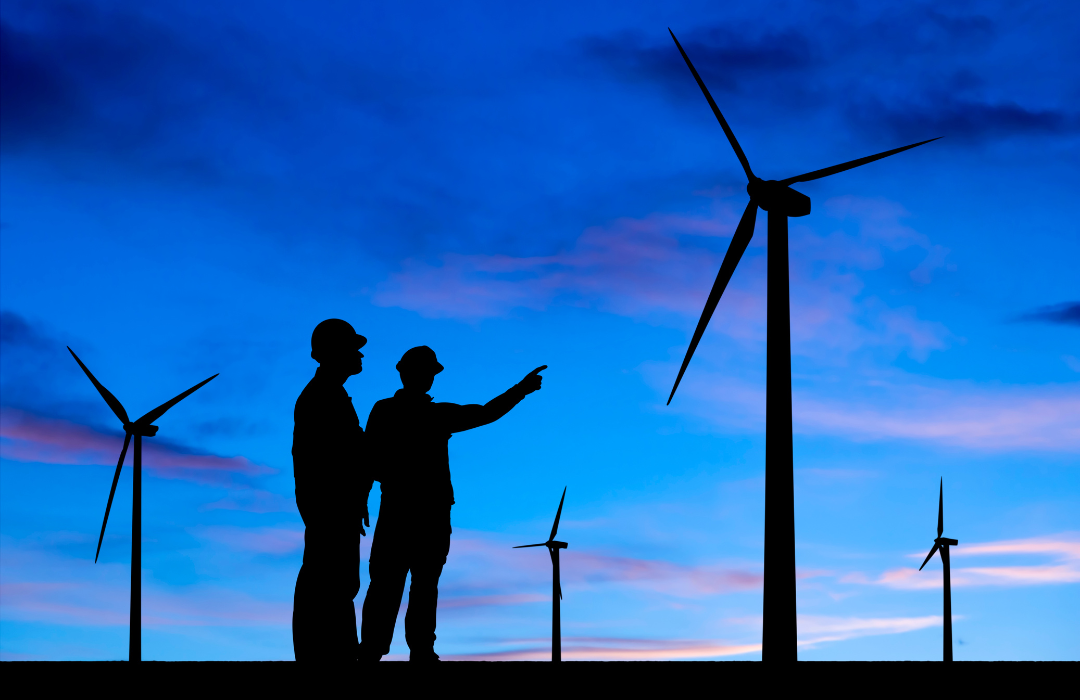
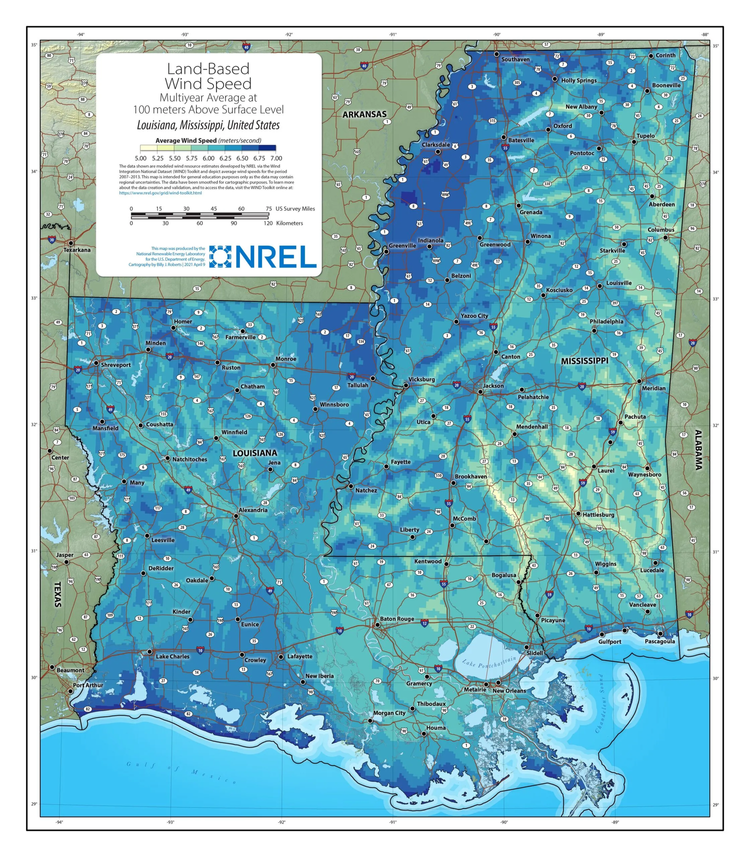
As a commercially available, utility-scale technology, wind already generates electricity on the gigawatt scale to power millions of homes without burning any fuel or emitting carbon dioxide. With the success of Mississippi’s Delta Wind Farm —the first wind project in MISO South— and recent technological advancements, Louisiana has the potential to be a leader in the field and harness similar opportunities to drive economic growth, especially in agricultural regions and farming communities.
Wind turbines harness wind energy by converting the kinetic energy of wind into electricity. When blade turn, they spin a rotor connected to a generator. Grouped together in wind farms, turbines provide bulk power to the electrical grid (DOE). Taller turbines, reaching up to 700 feet, are essential for capturing wind at greater heights, especially in the Southeast.
Onshore wind has the lowest cost of any energy technology, making it the most affordable energy source in the US, starting at $27/MWh.
Onshore wind turbines use less than one acre of land each, allowing farmers to continue planting crops and grazing livestock around them. Livestock are unaffected by turbines, and landowners can earn more per acre by hosting a turbine than from traditional farming or ranching activities. This additional income helps diversify and stabilize farm operations, providing guaranteed, long-term revenue (LandGate).
Wind energy projects create new job opportunities during construction, and for ongoing operations, and maintenance. Building a new wind farm can create over 100 jobs. Wind turbine technician is the fastest-growing growing in the U.S., offering a median pay of $61,770 per year (Global Wind Energy Council).
Wind farms significantly boost local property taxes, funding essential services such as schools, roads, and emergency services. A single county can receive over $100 million from a wind project, with the U.S. wind industry paying more than $1 billion annually in state and local taxes (Electrek, LBL).
Generating local electricity reduces dependence on foreign energy, enhances security, and stabilizes the grid, making Delta region communities more self-reliant and less vulnerable to energy price fluctuations.
Strict permitting ensures bird safety by adhering to laws like the Endangered Species Act and the Migratory Bird Treaty Act. While wind turbines can impact some bird populations, evolving turbine technology now includes radar systems to detect and protect aviary species. These systems can warn birds of collision risks, automatically stop turbines, and monitor bird and bat behavior, providing real-time updates to reduce wildlife impact (IdentiFlight, NRG Systems).
Our utility bills fluctuate when fuel prices fluctuate. Louisiana’s heavy reliance on natural gas for electricity exposes ratepayers to that price volatility — when the price of gas goes up, our electric and gas bills do too.
Wind energy offers something different: a fuel-free resource that performs well during high-demand winter periods, strengthens grid reliability, and helps protect consumers from price spikes.
By investing in a more diverse energy mix that includes wind, Louisiana can move toward a future where electricity is not only reliable — but more affordable and predictable for families and businesses.
By providing farmers with extra income while preserving their land and creating local jobs, wind power energizes the regional economy where it can make the biggest impact. Embracing wind energy is a step toward a more vibrant and prosperous future for the Southeast.
More Resources from Southeastern Wind Coalition
Output varies by size and wind speed, but a single modern utility-scale turbine can power hundreds to thousands of homes annually. Nationwide, wind generates more than 155 gigawatts of capacity — enough to power roughly 50 million American homes.
Historically, wind projects were concentrated in the Midwest and West. But turbine technology has advanced significantly. Taller towers and improved blade designs now allow turbines to capture viable wind resources in areas once considered marginal — including parts of Louisiana and the broader Southeast.
This opens new opportunities for local investment and rural economic development.
Most land-based wind projects take several years from planning to operation. Construction typically lasts 12 to 18 months after approvals are secured. Projects undergo environmental review and community engagement before breaking ground.
Wind projects must comply with federal wildlife protection laws. Modern wind farms increasingly use technologies such as radar detection systems that monitor bird and bat activity and can temporarily pause turbines when needed. These advancements have significantly reduced impacts compared to early-generation turbines.
Wind farms typically operate for 25 to 35 years, and many are now being repowered with updated equipment to extend their lifespan. Developers establish decommissioning funds to ensure turbines can be removed when projects end. Recycling technologies are also expanding, allowing turbine materials to be repurposed into new products.