The plan represents the EPA’s efforts to follow Obama’s directive to regulate carbon emissions under the Clean Air Act. The challenging states claim the goals are too ambitious and will hurt local economies.
A report released by West Virginia University’s Center for Energy & Sustainable Development and Downstream Strategies details some methods that states could employ to meet the new standards.
The proposed Clean Power Plan, expected to take effect in 2016, would set state-specific standards to limit carbon dioxide emissions from existing power plants. This plan would give states lots of flexibility in meeting their goal and allow them to select the combination of market-based mechanisms, regulations and efficiency standards most feasible for their state.
West Virginia’s energy economy is almost entirely dependent upon coal. Coal represented 95.3% of the state’s electricity generation in 2013 with the majority of that power (60%) being exported to other states. This level of reliance on coal puts the state’s economy at risk in the face of rising coal costs, environmental regulations, and cost-competitive alternatives.
WVU’s report, “The Clean Power Plan and West Virginia: Compliance Options and New Economic Opportunities,” describes a combination of measures the state could use to scale back their current coal economy in favor of greener alternatives and meet the Clean Power Plan standards.
It also models the results of a few of these strategies, some of which show better outcomes than others.
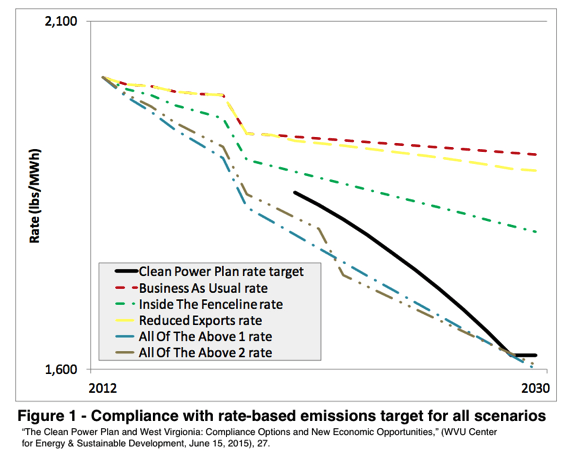
Figure 1 shows how certain policy decisions in West Virginia could help or hurt its ability to achieve the emissions reductions called for by the Clean Power Plan.
Business As Usual: This represents a continuation of existing emissions and generation trends without any significant policy changes to comply with the Clean Power Plan. Under current energy and environmental policies, West Virginia would be unable to meet the proposed emissions standards.
Inside The Fenceline: If state regulators used a stricter interpretation of existing legislative directives, they could achieve a 6% heat rate improvement in existing power plants. The heat rate of a power plant is the amount of fuel needed to generate one unit of electricity. Lowering a power plant’s heat rate makes it more efficient and means it emits less CO2. While improving heat rates will be an important element in meeting Clean Power Plan goals, this pathway alone falls short of reaching Clean Power Plan standards.
Reduced Exports: West Virginia currently exports 60% of the power it generates. By not burning coal for export to other states, West Virginia could reduce its emissions substantially. However, without increasing generation from other power sources, the state would lose this export revenue and neighboring states would have to find or build new sources of electricity. This reduction in generation without investing in other supply- or demand-side resources would hurt West Virginia economically. Also, while this pathway reduces the overall mass of CO2 the state releases, it does not improve the rate of emission – pounds of carbon emitted per megawatt hour of electricity produced.
These building blocks include: improving the heat rate at existing coal-fired plants, using more efficient natural gas combined cycle (NGCC) power plants, expanding generation from new renewable resources while preserving generation from at-risk and under-construction nuclear power plants, and reducing demand through energy efficiency.
All Of The Above 1 and 2: These two plans demonstrate how West Virginia can both meet its emissions goals and remain a key energy exporter. This would involve a combination of modest heat rate improvement for existing coal-fired plants, natural gas co-firing at two coal-fired plants, adding a new Natural Gas Combined Cycle plant, reducing the dependence on coal for electricity generation, using combined heat and power systems to cogenerate electricity and heat, adding new wind, solar and hydro generation to account for 9% of total load, and creating demand-side energy efficiency programs. The plans use different proportions of each of these building blocks to meet reduction standards, with All Of The Above 2 using coal and natural gas to cover a higher percentage of the state’s total load and All Of The Above 1 investing more in renewables and efficiency.
The report recommends West Virginia:
The report provides a compelling response to the “sky is falling” rhetoric from states opposing the Clean Power Plan. It sets an example for other challenging states, showing how a few policy tweaks can allow states most invested in fossil fuels to lower their CO2 emissions and adapt to new regulations.
If West Virginia can do it, anyone can – That’s you Louisiana.