The meeting largely focused on water issues residents who are served by Magnolia Water are experiencing. Many customers on the Northshore have been engaged in a fight since last year to get clean water at a fair price. Residents raised concerns about brown water, sewage leaks, and billing overcharges.
For nearly a year, residents who get their water from Magnolia Water have experienced water quality issues, including brown water and sewage leaks, as well as billing overcharges. These persistent issues have led them to ask the Public Service Commission for an audit. During the discussion the Commission stated it only has the authority to perform financial audits, not water quality audits, and that ensuring water quality is the responsibility of the Louisiana Department of Health (LDH) and Louisiana Department of Environmental Quality (LDEQ).
The Alliance’s position is that it’s important the Commission not cede its authority on this matter. They do have the power to conduct both a financial and water quality audit. The Commission can even tie rates to companies’ performances. When companies don’t perform well, the Commission has the authority to investigate and penalize them.
Numerous residents came to the Commission meeting and stated in their comments that they have already reached out to LDH and LDEQ urging them to test water quality. LDH and LDEQ say the water is safe to drink, despite the fact that residents have done their own testing that indicates otherwise and their water is still coming out of the faucet brown.
The Commission decided to move forward with an audit, but the full scope of the audit is unclear at this point. As part of the solution, the Commission also proposed a technical conference with Commission Staff, Magnolia Water, LDH, LDEQ, and residents, so they can hear directly from LDH about their water assessments.
While the audit process is underway, residents have asked the Commission to temporarily deny Magnolia’s request to extend their Formula Rate Plan — a formula that determines what customers pay and how much profit Magnolia is allowed to make.
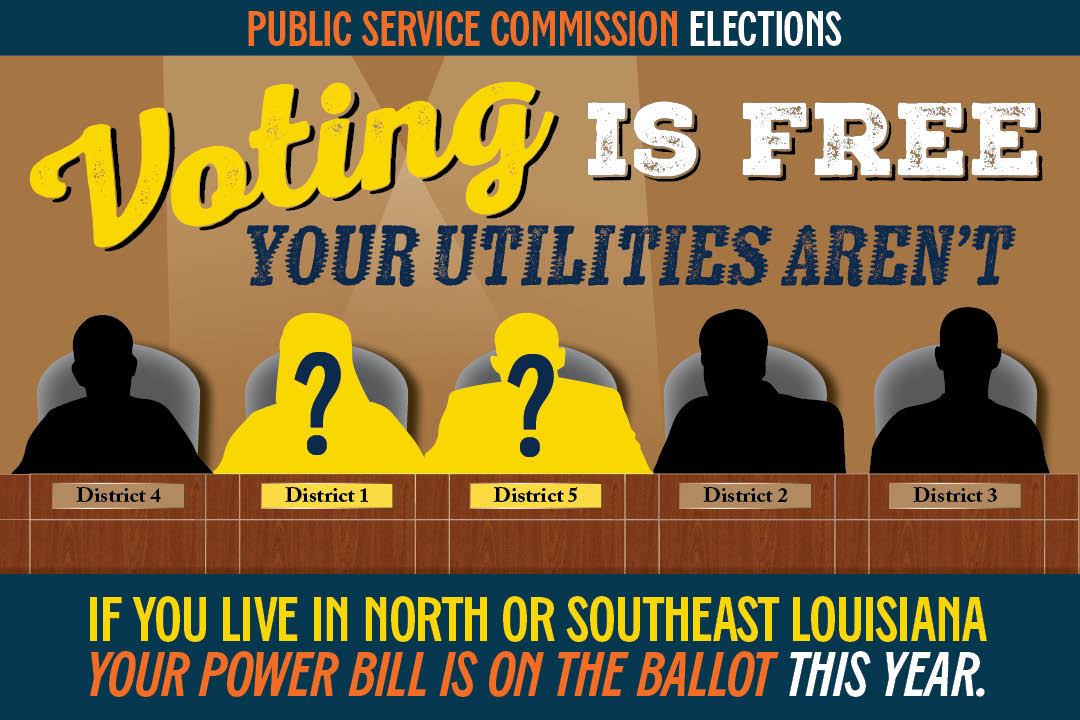
All four District 1 PSC candidates attended the meeting and called for increased scrutiny on Magnolia Water.
Ultimately, the Commission voted to approve the formula rate plan extension, under the condition that Magnolia would also be audited. The Commission has a responsibility to protect residents and ensure utility companies are held accountable for the quality of services they provide.
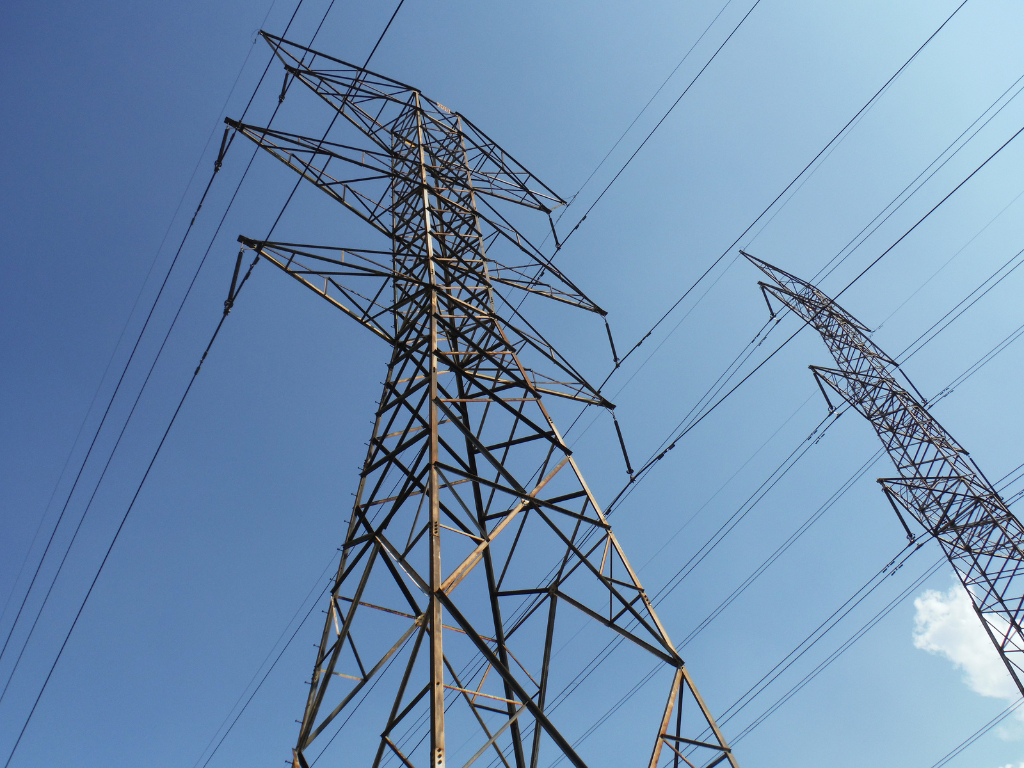
Entergy Louisiana has applied for permission to build a new power line, specifically a 230kV transmission line from Adams Creek to Robert.
The Administration Law Judge (ALJ) that reviewed the case recommended against the project moving forward. The line is largely being constructed to serve Entergy’s “anticipated load growth,” largely coming from industrial customers not residents. As the ALJ pointed out in their recommendation, there is uncertainty about whether there will actually be the expected level of demand for power from these customers.
Despite the ALJ’s recommendation, the Commission voted unanimously to approve the application and move the transmission project forward.
The Commission decided to move forward with an audit of Delta Utilities to investigate their purchased gas adjustment filings. In order to supply us with enough gas, utilities both generate their own gas, and often purchase additional gas on the market. Utilities submit Purchased Gas Adjustment filings monthly to the Commission to show when they have to go to the market and buy gas to serve their customers and how much it costs.
The wholesale price of natural gas on the market fluctuates daily. When demand for gas is high, that means the price of gas on the market is also higher. Those fuel adjustment prices get passed down to us on our bills, however, utilities cannot mark up the price or make a profit on the gas they sell us from the market.
Residents have expressed concerns about billing since Delta Utilities took over their gas service, and have called for the Commission to conduct an audit to look into pricing concerns. The Commission agreed, and is now auditing the PGAs of Delta Utilities to make sure Delta sourced the least cost gas when they went to the market, and that residents are getting the best deal possible.
At today’s meeting the Commission hired a consultant, Drexel Hamilton, to assist the audit process.
In April, Cleco announced that they intend to sell the company to two private equity firms, Stonepeak Energy and Bernhard Capital Partners. The deal still requires approval from the PSC before it can be finalized.
Cleco is the second-largest electric utility in the state, serving nearly 300,000 customers across 24 parishes and 4 Public Service Commission districts.
The utility is currently owned by a private investor group led by Macquarie Asset Management, along with British Columbia Investment Management Corporation and Manulife Investment Management. That group acquired Cleco in 2016 in a $4.9 billion deal approved by the PSC.
What could this mean for Cleco’s customers?
The Alliance’s thoughts: The commitments Cleco and the buyers made with the Commission as part of the 2016 sale need to be upheld to ensure that the new owners are providing quality electric service at a fair price, and that residents are protected from any negative impacts of this sale. There were 77 commitments made by Macquarie in the last deal to protect customers when they acquired Cleco, ranging from financial protections and maintaining their low income programs, to keeping the Cleco headquarters located in Pineville. Importantly, as part of the last sale, there was a commitment that residents would not incur any costs from the sale.
If approved, the sale would expand private equity’s ownership of Louisiana’s utility infrastructure, following Bernhard Capital Partner’s recent acquisitions of Entergy and Centerpoint Energy’s gas businesses.
As part of its review, at today’s meeting the Commission hired Fishman Haygood as counsel to provide expertise on the matter.
Private Electrical Grids
Commissioner Coussan directed the Commission to open a docket to evaluate “private use electrical networks” to enable generation to serve new large loads looking to locate in Louisiana. The specifics of what this looks like is to be determined in coming months by intervening parties, including The Alliance, but what it looks like so far is a way for industrial companies to abandon the shared, public grid to create their own.
Commissioner Coussan’s directive comes in response to the creation of the Louisiana State Senate Task Force, which is studying policies regarding energy self-generation, industrial microgrids, and expedited permitting.
The Alliance maintains that residents need to be protected from any and all stranded costs associated with this proposal or with industrial companies exiting the system.
Frances will Represent the PSC at MISO at SPP
In an unexpected and uncommon move, the Commission determined mid-year that Commissioner Mike Francis will replace Commissioner Eric Skrmetta to represent the Commission for the remainder of the 2026 year at the Southwest Power Pool (SPP), Organization of MISO States (OMS), and Entergy Regional States Subcommittee (ERSC). SPP and MISO are regional transmission organizations; and OMG and ERSC are committees at MISO.
Regional transmission organizations (RTOs) are nonprofit organizations that help manage our electric grid.
There are 7 regional transmission organizations across the country. The majority of Louisiana is part of MISO, but certain parts of North Louisiana near the border of Texas and Arkansas are part of SPP. RTOs like MISO and SPP exist for the express purpose of providing consumer focused planning, which utilities in their territories may not otherwise provide.
The Commission elects a voting representative to make decisions on behalf of the Commission in each RTO, which is the role Commissioner Francis will now hold.